Marriage in Islam is more than just a social arrangement. it’s a sacred covenant filled with rights and responsibilities for both husband and wife. Among these rights, one stands out for its deep meaning and divine command: Mehr (also called Mahr in Islam).
Sadly, in some communities today, Mahr has either become a symbolic figure without real value or an excessively high demand that causes unnecessary burden. Often, this comes from a lack of understanding of its true purpose in Islam.
If you’re wondering what Mahr in Islam really means, its rules, types, and what happens if it’s not paid, this guide will walk you through everything, including Qur’anic references, hadith, and practical advice for couples.
Table of Contents
What Is Mahr in Islam?
In Islam, Mahr is a mandatory bridal gift from the groom to the bride, agreed upon during the Nikah (Islamic marriage contract). It is not a wedding cost or cultural dowry, it is the wife’s full legal and spiritual right and a symbol of the husband’s respect and commitment. The Qur’anic Command on Mahr
Allah ﷻ says in the Qur’an:

“And give the women [upon marriage] their [bridal] gifts graciously. But if they, of themselves, be pleased to give up to you a portion thereof, then enjoy it with good cheer.”
(Surah An-Nisa, 4:4)
This verse makes two things very clear:
- Mahr must be given willingly and respectfully.
- Once received, it belongs entirely to the wife; no one else has a claim over it.
Why Mahr Is Important in Islam
The purpose of Mahr goes beyond money; it carries spiritual, emotional, and practical significance:
- A Symbol of Respect – Publicly honors the dignity and rights of the wife.
- Financial Security – Serves as a safety net in the case of divorce or the husband’s death.
- An Act of Worship – Fulfills a direct command of Allah, making it an act of obedience.
- A Foundation of Generosity – Sets the tone for a marriage built on respect and care, not exploitation.
Forms and Types of Mahr in Islam
In Islam, giving Mahr is a serious obligation, but Allah has kept it easy and flexible so that every groom, whether wealthy or of modest means, can fulfil it without hardship. There’s no fixed rule that it must be in a specific form, amount, or at a particular time. Instead, the only condition is that it should have value, be mutually agreed upon, and be given sincerely.
This flexibility ensures that the spirit of Mahr respect, generosity, and security for the bride remains intact, while making it practical for people in all circumstances. Let’s look at the common forms Mahr can take and the main types based on when it’s paid.
Forms of Mahr in Islam
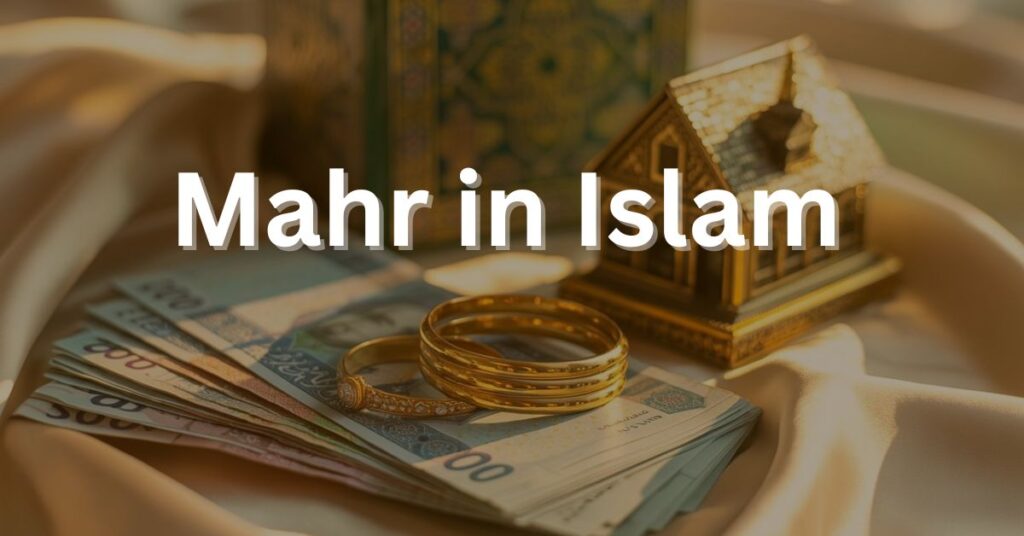
Islam gives flexibility regarding what can be offered as Mahr; what matters is that it has value and is agreed upon by both parties. Common forms include:
| Cash | A fixed sum in the local currency. |
| Gold or Jewelry | A popular and culturally significant choice. |
| Property or Land | Long-term financial security for the bride. |
| Valuable Service or Knowledge | As in the Sunnah, where teaching Qur’an was accepted as Mahr. |
Key Rule: Once Mahr is given, it becomes solely the property of the wife; she can spend, save, or gift it as she wishes, without interference.
Types of Mahr in Islam
Islamic law recognizes two main types of Mahr:
1. Immediate Mahr (Mu‘ajjal)
- Paid at the time of Nikah or shortly after.
- Shows the groom’s readiness to fulfill his marital duties.
- The amount and timing should be mentioned clearly in the marriage contract.
2. Deferred Mahr (Mu’wajjal)
- Payment is postponed to an agreed future time, often due at divorce or the husband’s death.
- Serves as financial protection for the wife in unforeseen circumstances.
- Must be documented in the Nikah contract to prevent disputes.
The Prophet ﷺ encouraged keeping Mahr reasonable, neither so high that it burdens the groom, nor so low that it loses meaning.
Is It Halal to Delay Mahr?
Yes, delaying Mahr is permissible in Islam if both parties agree and it is clearly documented. Scholars agree that the Qur’an does not impose a fixed deadline, but once the agreed time arrives, payment must be made without delay.
Allah says:

"...and give women their wedding gifts generously [at the time of marriage]..."

(Surah An-Nisaa 4:4)
The word “graciously” here applies to both prompt and delayed payments, meaning it must be given willingly, respectfully, and on time.
Conditions for a valid deferred Mahr:
- Mutual Agreement – Both bride and groom consent during the Nikah.
- Clear Documentation – Amount and due date must be written in the marriage contract.
- Timely Payment – Once due, it must be paid immediately.
- Fair Amount – Avoid excessive or unrealistic figures.
Delaying Mahr as a tactic to avoid payment is haram and a breach of trust.
What Happens If Mahr Is Not Paid?
Mahr is not optional; it is a binding obligation. If it remains unpaid:
- It Becomes a Debt -The husband is Islamically and legally indebted to his wife until payment.
- Inheritance Deduction – If the husband dies, unpaid Mahr is taken from his estate before distributing inheritance.
- Wife’s Legal Right – She can demand it at any time during marriage.
- Marriage Remains Valid – But the obligation stays until fulfilled.
The Prophet ﷺ said:

“The wealth of a Muslim is not lawful for another except by his consent.”

(Sunan al-Daraqutni, Sahih)
Refusing to pay Mahr without the wife’s consent is a sin and a violation of her rights.
Conclusion
Mahr in Islam is not just a cultural tradition; it is a divinely mandated right that reflects respect, love, and responsibility within a marriage. Whether it is given immediately or deferred, it must be fulfilled with sincerity and without delay once it becomes due. Ignoring or underestimating Mahr is both a moral and legal violation in Islam.
By keeping Mahr reasonable, documenting it clearly, and honoring the agreement, couples can start their marital journey with barakah (blessing), mutual respect, and trust. A marriage that begins with fulfilling Allah’s commands lays the foundation for a happy, secure, and lasting relationship.
- What is Talaq in Islam? | Meaning, Types & Process
- Islamic Marriage Guide: 10 Beautiful Ways to Make Your Nikah Full of Barakah
- 12 Myths About Mehr in Islam (And the Truth Behind Them)
- How to Decide a Reasonable Mahr in Islam: Quran & Sunnah Guide
- Mahr in Islam: Meaning, Types, Rules, and What Happens If It’s Unpaid
2 thoughts on “Mahr in Islam: Meaning, Types, Rules, and What Happens If It’s Unpaid”